

Chris Blarsky, known in the online community as deathstarchris, represents a unique convergence of artistic vision, technical expertise, and creative innovation in the world of custom hardware modification. In an era when most consumers passively accept technology as manufacturers deliver it, Blarsky has built an international reputation by fundamentally reimagining how existing hardware can be transformed, enhanced, and repurposed. His work spans multiple disciplines—from transforming vintage gaming consoles into sophisticated music production tools to creating elaborate custom computer builds that merge functionality with spectacular visual aesthetics.
The significance of Blarsky’s work extends beyond merely creating visually impressive machines. His projects represent a philosophy that challenges technological determinism and demonstrates that hardware need not be static or limited by its original design specifications. Through his company Ninstruments and his various independent projects, Blarsky has become a leading figure in the maker movement, inspiring countless enthusiasts to view technology with greater creativity and to see possibilities where manufacturers intended finality. His influence touches the electronic music community, the gaming enthusiast world, computer customization culture, and increasingly, accessibility technology design.
Understanding Chris Blarsky requires appreciating both the technical mastery that enables his work and the artistic vision that drives his design choices. He is simultaneously an engineer, artist, and visionary whose projects often blur the boundaries between functional tools and kinetic sculptures. His approach to hardware modification serves as a model for how technology can be personalized, customized, and adapted to serve specific creative or functional purposes.
Quick Info
| Detail | Information |
|---|---|
| Online Name | deathstarchris |
| Primary Expertise | Computer hardware modding, synthesizer design |
| Company/Brand | Ninstruments |
| Most Famous Project | SYNTHBOY+ (modified Game Boy synthesizer) |
| Notable Build | DJ Sound Control (DSC) platform |
| Experience | Over 15+ years in hardware modification |
| Additional Skills | Airbrushing, graphic arts, screen printing |
| Community Focus | Custom electronics, retro gaming, electronic music |
Who Is Chris Blarsky? Background and Introduction
The Person Behind the Pseudonym
Chris Blarsky operates professionally under both his real name and the online pseudonym deathstarchris. The choice to use an online identifier reflects the collaborative and community-oriented nature of the maker and hacker culture he participates in. In online forums, social media platforms, and the broader electronics modification community, deathstarchris has become a recognizable brand associated with innovation, technical excellence, and creative ambition. This online presence has allowed him to build a global community of followers, collaborators, and admirers who engage with his projects, share his passion for hardware modification, and benefit from his willingness to document and share his processes.
The distinction between his real name and online pseudonym represents something important about contemporary technical culture. The online identity allows for professional branding, community recognition, and separation between personal life and public-facing work. It also reflects the democratic spirit of online communities, where reputation and recognition are based on contributions and expertise rather than on traditional credentials or institutional affiliations.
Professional Identity and Career Focus
Chris Blarsky’s professional identity centers on hardware modification, custom electronics design, and the creative exploitation of existing technology to serve new purposes. Unlike traditional career paths in engineering or design that typically occur within corporate environments, Blarsky has built his career as an independent creator, entrepreneur, and community leader. His work is characterized by technical precision, artistic vision, and willingness to tackle projects that mainstream manufacturers would never consider.
His career trajectory reflects the changing landscape of technology and making in the 21st century. Rather than pursuing credentials in electrical engineering or industrial design at traditional universities, Blarsky built expertise through hands-on experience, online learning, community engagement, and countless hours of practical experimentation. This path has proven increasingly viable as the maker movement has grown, as online resources for learning have proliferated, and as consumers have become more interested in customization and personalization.
Founding Ninstruments: Creating a Commercial Entity
The founding of Ninstruments represents Blarsky’s evolution from individual maker and artist to business owner and enterprise leader. Ninstruments, which Blarsky established and continues to operate, serves as the commercial infrastructure through which many of his most ambitious projects are executed. The company name itself—a combination of “Nintendo” and “instruments”—reflects the core mission of transforming gaming hardware into legitimate musical instruments and synthesis platforms.
Ninstruments operates at the intersection of multiple markets and communities. It serves electronic music producers seeking unique sound design tools, retro gaming enthusiasts interested in hardware modification, DIY musicians looking for affordable synthesizer platforms, and collectors interested in one-of-a-kind custom devices. This diverse customer base reflects the breadth of Blarsky’s interests and the way his projects naturally appeal to multiple constituencies. By establishing Ninstruments as a formal business, Blarsky has been able to scale his operations, collaborate with suppliers, and reach customers who specifically seek his custom work.
The World of Hardware Modification: Context and Culture
Understanding the Maker Movement and Hacker Culture
Chris Blarsky operates within the broader context of the maker movement and hacker culture—communities defined by enthusiasm for hands-on creation, modification, learning, and sharing of knowledge. The maker movement emphasizes that people have agency over technology, that creation need not require institutional support or corporate affiliation, and that the most interesting innovations often come from individuals and small teams pursuing projects driven by passion rather than profit motive.
Hacker culture, from which the maker movement partly derives, emphasizes exploration, curiosity, and the principle that systems can and should be understood, modified, and improved by users. The term “hacker” in this context refers not to criminal activity but rather to the practice of creatively exploiting and improving systems. This culture has historically been central to computing, where early personal computers were often modified and improved by their users, and where software was frequently shared, modified, and redistributed freely.
Blarsky’s work exemplifies both maker movement and hacker culture values. He explores how existing devices can be modified, he shares knowledge freely through documentation and online communities, and he demonstrates that individuals can create sophisticated technological innovations without institutional support. His approach challenges the idea that sophisticated technology must come from corporations or research institutions.
The Ethics and Legality of Hardware Modification
Hardware modification exists in a complex legal and ethical landscape. While many modifications are completely legal and ethical, some exist in gray areas defined by intellectual property law, warranty provisions, and manufacturer intentions. Chris Blarsky’s work generally operates ethically and legally, as he modifies devices he or his clients own, documents his work responsibly, and does not engage in counterfeiting or intellectual property theft. However, the very nature of modification—taking something a manufacturer designed and fundamentally changing it—represents a challenge to corporate control over technology.
The right to modify devices you own has become an increasingly important legal and political issue. Right-to-repair movements advocate for legal protections that allow consumers to modify, repair, and improve devices without violating terms of service or copyright law. Blarsky’s work implicitly supports these principles by demonstrating that modification can add value and create new possibilities. His willingness to modify Game Boys, computers, and other devices and to share how he does so represents a statement that technology should be subject to user agency and creativity.
The Role of Customization in Contemporary Technology
Customization has become increasingly important in technology markets. Rather than accepting standardized, off-the-shelf solutions, consumers increasingly expect to personalize devices to their specific needs, aesthetics, and preferences. This applies to everything from smartphone cases and computer peripherals to custom keyboard switches and personalized software configurations. Chris Blarsky’s work represents the extreme end of this customization spectrum—not merely cosmetic personalization but fundamental transformation of how devices function.
The demand for customization reflects several factors. First, mass-produced devices necessarily represent compromises designed to appeal to broad markets rather than to serve specific individual needs. Second, consumers increasingly value self-expression and individuality and view their technology choices as part of their personal identity. Third, the availability of tools, information, and communities makes customization increasingly accessible to non-professionals. Blarsky’s work both responds to and facilitates this broader trend toward customization and personalization.
The SYNTHBOY+ and Game Boy Synthesis
From Gaming Device to Musical Instrument
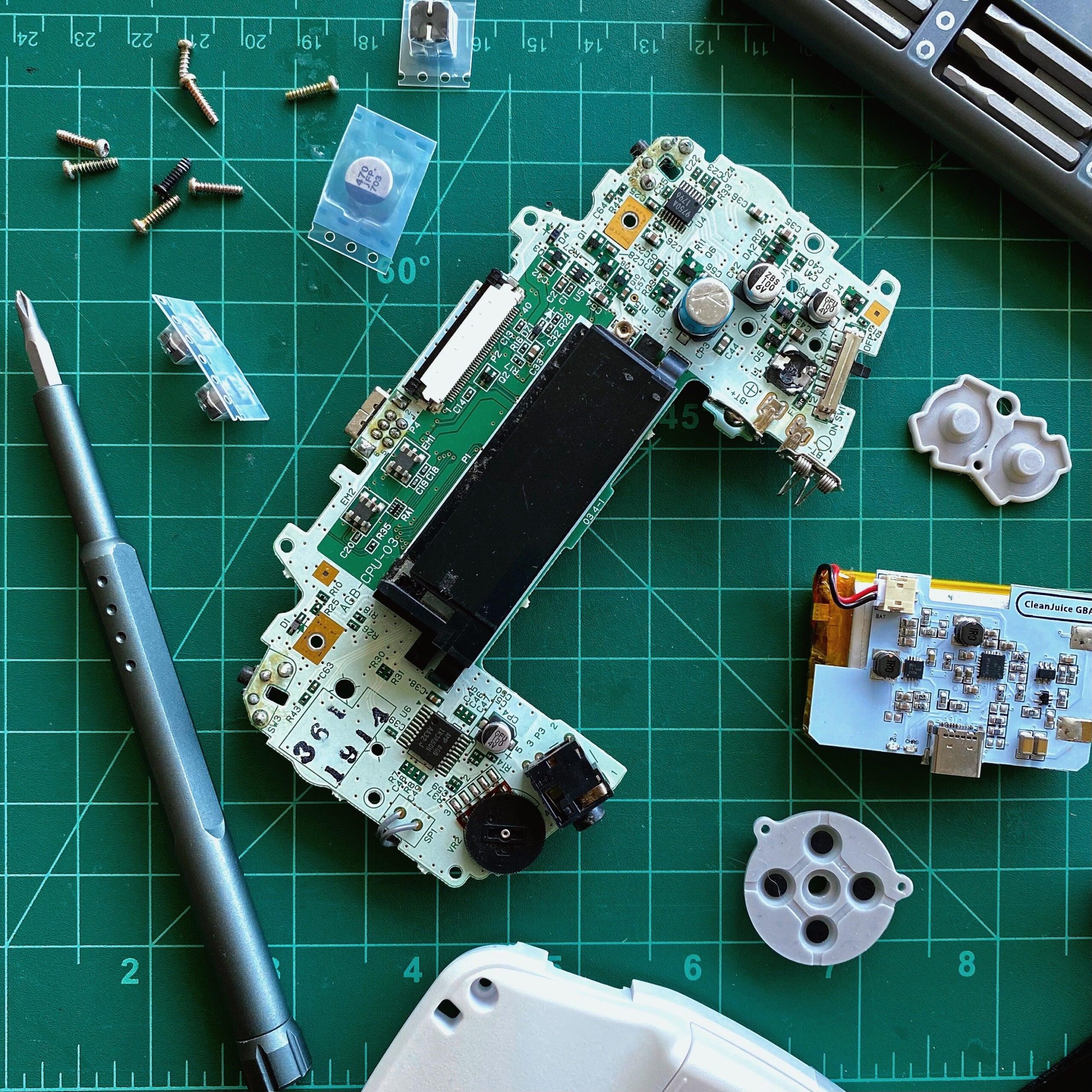
The SYNTHBOY+ represents one of Chris Blarsky’s most recognizable and successful projects. The transformation of the Nintendo Game Boy—a handheld gaming device released in 1989—into a sophisticated music synthesis platform demonstrates the creative possibilities of hardware modification. While Game Boys were originally designed solely for playing video games, creative musicians and hackers discovered that the device’s sound synthesis capabilities could be exploited and extended to create legitimate musical instruments.
The SYNTHBOY+ takes Game Boy modification to advanced levels. Rather than merely removing the back casing and adding basic modifications, Blarsky engineers comprehensive transformations that enhance the device’s capabilities, improve its interface, and expand its functionality as a music production tool. This might involve adding new buttons, modifying the screen interface, improving sound output quality, and creating custom software modifications or firmware enhancements that enable new synthesis capabilities.
Game Boy Music History and Cultural Context
To understand the significance of the SYNTHBOY+, context about Game Boy music culture is essential. During the 1990s and 2000s, musicians discovered that Game Boys could produce distinctive 8-bit and chiptune music through software tools like LSDJ (Little Sound Dj), a music production application written for the Game Boy platform. This discovery led to an entire musical genre and cultural movement of Game Boy musicians who released albums, performed live shows, and built communities around this unique instrument.
The Game Boy became particularly popular in lo-fi electronic music, chiptune, and experimental music communities because it offered an affordable, portable platform for music creation with a distinctive aesthetic and sonic character. Professional musicians who wouldn’t have otherwise had access to synthesizers could create sophisticated music on a device that cost only fifty to one hundred dollars. This democratization of music production represented exactly the kind of creative appropriation that characterizes hacker culture and the maker movement.
Technical Innovations in the SYNTHBOY+
The SYNTHBOY+ builds on this Game Boy music culture by enhancing the device’s hardware and potentially its software capabilities. Blarsky’s modifications might include improved audio output stages that deliver cleaner sound without distortion, custom controllers or interface modifications that make playing and programming easier, screen improvements that make visual feedback clearer, and potentially firmware modifications or custom cartridge development that expands the device’s synthesis capabilities.
Creating these modifications requires deep knowledge of Game Boy hardware architecture, experience with surface mount soldering and microelectronics, understanding of audio engineering principles, and familiarity with the existing Game Boy music software ecosystem. The fact that Blarsky can execute all these modifications at professional quality demonstrates comprehensive technical expertise across multiple domains.
Commercial Success and Community Impact
The SYNTHBOY+ has become commercially successful through Ninstruments, with Blarsky taking custom commissions for modified Game Boys. This commercial success reflects genuine demand from musicians seeking enhanced Game Boy platforms. The project demonstrates that there is a market for carefully executed hardware modifications that improve upon original designs and serve specific musical needs. Rather than merely being artistic projects, these modifications fulfill genuine functional purposes and meet real market demands.
The SYNTHBOY+ has also had significant community impact. The project demonstrates to other makers that existing devices can be transformed into sophisticated tools. It inspires other enthusiasts to pursue Game Boy modification, and it contributes to broader conversations about the creative possibilities of retro gaming hardware. By sharing documentation of his modifications and engaging with the Game Boy music community, Blarsky has helped establish standards and best practices for Game Boy modification work.
Custom Computer Builds and Spectacular Modding Projects
The Philosophy Behind Custom Computer Builds
Chris Blarsky’s custom computer builds represent projects where function and form merge to create machines that are simultaneously powerful tools and striking visual spectacles. Unlike mainstream computer manufacturers that prioritize standardization, cost efficiency, and mass-market appeal, custom builders like Blarsky prioritize individual vision, technical excellence, and aesthetic innovation. Each build represents a unique artistic statement while maintaining (or enhancing) the computer’s functional capabilities.
Custom computer building has evolved into a legitimate subculture with international competitions, online communities, and enthusiast audiences that rival traditional technology markets. High-end custom builds can command premium prices, with collectors and enthusiasts willing to pay substantial sums for machines that combine technical excellence with spectacular aesthetics. Blarsky’s reputation in this community reflects both his technical skill and his artistic vision.
The “Hulk PC” and Branded Collaborations
One of Blarsky’s most famous custom builds is the “Hulk PC,” a Marvel-themed computer that transforms the computer case and components to create a machine themed around the Hulk character. This project demonstrates Blarsky’s ability to integrate narrative themes, popular culture references, and character design into functional computing hardware. The Hulk PC likely features custom paint work, airbrushing, custom lighting, and component selections that reinforce the theme while maintaining performance capabilities.
The success of the Hulk PC and other branded builds has led to collaborations with major companies. Lenovo, a major computer manufacturer, has partnered with Blarsky on custom computer projects. These collaborations represent recognition that custom builders bring value to technology markets in ways that mass production cannot. By sponsoring or collaborating with talented builders like Blarsky, technology companies gain access to marketing visibility, technical expertise, and demonstrations of how their hardware can be utilized creatively.
The DJ Sound Control: Integration of Function and Form
The DJ Sound Control (DSC) represents perhaps Blarsky’s most ambitious and comprehensive project to date. This all-in-one DJ platform was built inside a heavily modified Lenovo IdeaCentre A700 and integrated multiple custom controllers, hardware synthesizers, effects modules, and software platforms into a single integrated system. Rather than requiring a DJ to set up multiple separate devices, the DSC consolidated all necessary equipment into one luggable unit.
The technical challenge of creating the DSC was substantial. Fitting synthesizers, effects modules, controllers, and a powerful computer into a single case while maintaining proper cooling, power distribution, and electromagnetic isolation required sophisticated engineering. The project likely involved custom PCB design, modification of existing modules, custom cabling, and extensive testing to ensure all components functioned together reliably. The result is a one-of-a-kind performance tool that demonstrates Blarsky’s ability to execute complex integrated systems.
The DSC exemplifies the principle that custom builders can create solutions to problems that commercial manufacturers haven’t adequately addressed. While there are DJ platforms available commercially, none precisely matched the vision and requirements that Blarsky created through the DSC. By building this system, he demonstrated that individual makers can create sophisticated, professional-grade equipment that rivals or surpasses commercial offerings.
Documentation and Knowledge Sharing
What distinguishes Blarsky from some other custom builders is his willingness to document his work and share knowledge with the community. Rather than treating his techniques as proprietary secrets, Blarsky shares build logs, process documentation, and technical information that allows other makers to learn from his experience and pursue similar projects. This approach reflects hacker culture values and contributes to community knowledge.
Documentation serves multiple purposes. It allows other enthusiasts to learn techniques and approaches. It preserves knowledge that might otherwise be lost if a builder retired from the hobby or business. It builds Blarsky’s reputation as an expert willing to share knowledge. And it contributes to broader conversations about hardware modification, custom building, and the creative possibilities of existing technology. In sharing his work, Blarsky elevates the entire maker community.
Synthesizer Design and Eurorack Modifications
Understanding Modular Synthesis and Eurorack
Modular synthesis represents a approach to music production and sound design where complex instruments are built by interconnecting specialized modules, each performing distinct functions. The Eurorack standard specifies physical dimensions, power specifications, and control voltage standards that allow modules from different manufacturers to be combined into integrated systems. This modularity encourages experimentation and allows musicians to customize their instruments precisely to their needs and aesthetic preferences.
The Eurorack ecosystem has grown substantially over the past two decades, evolving from a niche enthusiast market into a mainstream segment of the synthesizer industry. Both established synthesizer manufacturers and individual makers create Eurorack modules, resulting in a vast ecosystem of possibilities. The modularity encourages experimentation and creativity, as musicians constantly recombine modules in novel ways to create new sounds and workflows.
Blarsky’s Eurorack Conversions and Custom Modules
Chris Blarsky has worked on converting synthesizers and audio equipment from major manufacturers—including Moog, Eventide, and Pittsburgh Modular—into Eurorack modular formats. This work represents taking existing professional audio equipment designed for standalone operation and redesigning it to function as modular components that integrate into Eurorack systems. This requires deep understanding of the original equipment’s circuitry, the electrical principles of voltage control, and the physical engineering of fitting components into Eurorack format.
These conversions add value by making professional audio equipment more flexible and integrated. A synthesizer or effects unit that existed as a standalone device can be transformed into a component that seamlessly integrates with other Eurorack modules. This allows musicians to build custom synthesizer systems that combine equipment from multiple manufacturers in ways the original designers never contemplated. Blarsky’s conversions enable creative possibilities that wouldn’t exist with stock equipment.
The Intersection of Professional and DIY Synthesis
Blarsky’s synthesizer work demonstrates the increasingly blurred line between professional and DIY synthesis. Historically, professional synthesizer systems were expensive, complex, and available only to institutions and wealthy individuals. DIY synthesizer culture emerged partly as a reaction to this exclusivity, allowing musicians to build or modify synthesizers using readily available components and open-source designs. Contemporary synthesizer culture integrates professional, semi-professional, and DIY approaches, with musicians often mixing all three.
Blarsky’s work accelerates this integration by demonstrating that professional-grade audio equipment can be modified and customized by skilled individuals. His conversions allow musicians with moderate budgets to access sonic capabilities that would otherwise require expensive studio equipment. This democratization of music production tools reflects broader trends in technology and supports principles of access and inclusivity in music production.
Custom Module Design and Innovation
Beyond conversions of existing equipment, Blarsky likely engages in original module design and innovation. This might involve designing new circuits that perform novel synthesis or processing functions, packaging them in Eurorack format, and making them available to other musicians. Custom module design requires understanding analog electronics, synthesizer design principles, and the specific needs of contemporary electronic musicians.
This work positions Blarsky as not merely a modifier of existing equipment but as an innovator in synthesizer design. His original designs add new possibilities to the Eurorack ecosystem and contribute to ongoing evolution of modular synthesis capabilities. For musicians using his modules, they gain access to sound design possibilities that didn’t previously exist.
Artistic Skills and Multidisciplinary Expertise
Airbrushing and Custom Paint Work
Beyond electronics and mechanical engineering, Chris Blarsky possesses substantial expertise in artistic techniques including airbrushing, graphic arts, and screen printing. These skills enable him to create stunning visual aesthetics on his custom builds. Airbrushing allows for detailed, gradual color transitions, realistic imagery, and sophisticated visual effects that traditional painting techniques cannot achieve. This skill is particularly visible in projects like the Hulk PC, where airbrushing likely created realistic character artwork and visual effects.
Mastery of airbrushing requires understanding paint chemistry, spray equipment operation, color theory, perspective and proportion, and technical skill to execute designs with precision. The fact that Blarsky combines airbrushing expertise with hardware modification expertise means his builds achieve aesthetic sophistication that purely technical builders might lack. His projects are beautiful not merely incidentally but as a result of deliberate artistic vision and skilled execution.
Graphic Arts and Visual Design
Graphic arts skills enable Blarsky to conceptualize visual designs, understand proportion and composition, and execute sophisticated aesthetic visions. These skills manifest not only in painted artwork but also in component selection, case modification, lighting design, and overall visual composition of builds. A computer case is fundamentally a three-dimensional canvas, and Blarsky’s graphic arts expertise allows him to compose this space as a coherent artistic statement.
Understanding graphic design principles also influences functional aspects of builds. Blarsky can design interfaces that are simultaneously aesthetically appealing and functionally intuitive. He understands how visual hierarchy communicates function and how color, shape, and proportion guide user attention and interaction. These considerations ensure his builds are not merely beautiful but also usable tools.
Screen Printing and Production Techniques
Screen printing expertise represents another layer of Blarsky’s artistic capability. Screen printing allows for precise reproduction of designs on various surfaces and at various scales. For someone building custom hardware, screen printing knowledge enables creation of custom decals, labels, printed components, and detailed graphics that can be applied to builds. This skill enables Blarsky to create professional-looking custom branding and aesthetics even on builds produced in small quantities.
The combination of airbrushing, graphic design, and screen printing creates a comprehensive toolkit for visual customization. Rather than being limited to a single technique, Blarsky can select the most appropriate method for each project. This flexibility allows him to execute complex visual visions that integrate multiple techniques seamlessly.
The Integration of Art and Engineering
What distinguishes Blarsky’s work from purely technical hardware modification is the integration of artistic vision with engineering expertise. Many skilled engineers can create functionally excellent machines that are aesthetically mediocre. Many skilled artists can create beautiful objects that don’t function well. Blarsky’s unique contribution is demonstrating that these disciplines can integrate seamlessly, with artistic vision guiding functional design and technical capability enabling ambitious artistic visions.
This integration reflects a philosophy that technology need not be purely utilitarian. Rather, technological objects can be beautiful, expressive, and emotionally resonant while maintaining or enhancing functionality. This perspective challenges the assumption that function and aesthetics represent trade-offs; instead, Blarsky demonstrates they can reinforce each other.
Accessibility Technology and Inclusive Design
Commitment to Accessibility
Beyond his high-profile custom builds and synthesis work, Chris Blarsky has dedicated engineering talent to creating accessible computer interfaces for the disabled community. This work represents commitment to using technical skills to address genuine human needs and to ensure that technological benefits are available to people with disabilities. Accessibility engineering is technically challenging and often receives insufficient attention from mainstream manufacturers, making work by dedicated individuals like Blarsky particularly valuable.
Accessibility considerations span a wide range of disabilities and functional needs. Some people require interfaces that don’t depend on fine motor control. Others need adaptations for visual impairments, hearing impairments, or cognitive disabilities. Each adaptation requires understanding both the specific disability and how technology can be modified to work effectively for people with that disability. Blarsky’s accessibility work demonstrates commitment to inclusive design principles.
Custom Interfaces for Specific Needs
The accessibility work might involve creating custom input devices for people with limited dexterity, developing interfaces optimized for users with visual impairments, or creating adaptive controllers that allow people with various disabilities to operate computers and music production systems. This work often receives less publicity than spectacular gaming or DJ builds, but it represents some of the most meaningful application of maker skills.
Accessibility modifications typically require understanding both hardware and software, as many accessibility adaptations involve both device modifications and custom software. Someone with limited hand function might require foot pedals, chin controls, or eye-tracking interfaces instead of traditional keyboards and mice. Creating such adaptations requires engineering sophistication and deep understanding of user needs.
Philosophy of Inclusive Technology
Blarsky’s commitment to accessibility technology reflects a philosophy that technology should be inclusive and that people with disabilities should have access to the same creative and functional possibilities as people without disabilities. A musician with cerebral palsy should be able to produce electronic music with custom-modified instruments. A person with limited vision should be able to use computers and access digital information. A person with motor disabilities should be able to play games and engage with interactive media.
This philosophy aligns with broader disability justice movements that emphasize that inclusion requires active effort and design change, not merely charitable assistance. By dedicating his technical expertise to accessibility, Blarsky contributes to making technology more inclusive and to expanding the circle of people who can access creative and professional tools.
The Online Community and Knowledge Sharing
Building Community Through Documentation
Chris Blarsky’s presence online as deathstarchris has enabled him to build an international community of followers, collaborators, and admirers. Through social media, online forums, and his own documentation platforms, he shares his work, documents his processes, and engages with other makers and enthusiasts. This community engagement has made him a recognized figure in multiple subcultures—electronic music, retro gaming, custom computing, and maker communities.
Documentation serves as a form of knowledge transfer that makes Blarsky’s expertise accessible to people who cannot directly collaborate with him. Detailed build logs, technical write-ups, and process videos allow others to learn from his experience and pursue similar projects. This democratization of knowledge represents an important contribution to maker culture and helps establish standards and best practices for hardware modification.
Influence on Contemporary Maker Culture
Blarsky’s influence extends beyond his specific projects to shape broader maker culture. His work demonstrates that individuals can execute sophisticated, professional-grade projects without institutional support or corporate affiliation. His combination of technical skill, artistic vision, and community engagement provides a model for contemporary makers. His willingness to document and share knowledge contributes to collective learning and advancement of maker capabilities.
The visibility of Blarsky’s projects also influences what kinds of making are considered prestigious and worthy of attention. By demonstrating that hardware modification, synthesizer design, and accessibility engineering represent legitimate and valuable pursuits, he helps shift cultural perceptions of what constitutes meaningful work.
Collaboration and Community Building
Rather than working in isolation, Blarsky engages in collaborations with other makers, musicians, manufacturers, and community members. These collaborations take various forms—sponsorships with companies like Lenovo, partnerships with musicians using his custom instruments, collaborations with other makers on specific projects, and engagement with online communities around specific interests like Game Boy music or custom computing.
These collaborations strengthen communities and create synergies that wouldn’t exist if Blarsky worked in isolation. By collaborating with other experts, he can access knowledge and capabilities beyond his own expertise. By engaging with communities, he contributes to collective learning and helps establish norms and best practices. This collaborative approach reflects contemporary understanding that innovation often emerges from communities rather than from isolated individuals.
Technical Expertise and Skill Development
Years of Hands-On Experience
Blarsky’s reputation rests on over 15 years of hands-on hardware modification experience. This extensive experience has allowed him to develop sophisticated technical skills across multiple domains—soldering and microelectronics, computer systems architecture, audio engineering, mechanical design, software programming, and manufacturing processes. This breadth of knowledge allows him to approach complex projects that require integration across multiple technical domains.
The development of such comprehensive expertise typically requires sustained commitment and consistent challenge-seeking. Rather than becoming comfortable with a single skill, Blarsky has continuously expanded his capabilities to tackle new challenges. Each project teaches lessons and opens possibilities for more ambitious subsequent work. This trajectory reflects the maker philosophy of continuous learning and improvement.
Soldering and Microelectronics
At the foundation of much of Blarsky’s work is expertise in soldering and microelectronics. Modifying modern electronics often requires surface mount soldering—applying solder to tiny component pads at high precision. This skill requires steady hands, good vision or magnification, understanding of solder chemistry and temperature management, and extensive practice. Not everyone can develop this skill to professional levels; Blarsky’s ability to execute complex microelectronics work at high quality reflects substantial talent and dedication.
Systems Integration and Problem Solving
Beyond individual technical skills, Blarsky demonstrates expertise in systems integration—taking multiple complex subsystems and making them function together seamlessly. The DJ Sound Control represents an example of this capability; it integrates synthesizers, effects modules, controllers, and computer systems into a single functional platform. Achieving this integration requires solving problems across electrical, mechanical, thermal, and software domains simultaneously.
This systems-level thinking allows Blarsky to take on ambitious projects that individual technicians might find overwhelming. Rather than viewing each component in isolation, he sees how they interact and creates designs that optimize overall system performance and usability.
Self-Education and Continuous Learning
Blarsky’s expertise was largely developed through self-education rather than through formal institutional training. This reflects the reality that contemporary maker culture offers abundant opportunities for self-teaching through online resources, community engagement, and hands-on experimentation. Blarsky likely learned through online tutorials, community forums, books, reverse-engineering commercial products, and most importantly, through countless hours of practical experimentation and troubleshooting.
The ability to self-educate effectively requires genuine intellectual curiosity, discipline, and willingness to embrace failure as a learning opportunity. Blarsky’s sustained engagement in learning new techniques and approaching novel challenges demonstrates these qualities. His trajectory demonstrates that formal credentials, while valuable, are not the only pathway to developing sophisticated technical expertise.
Impact and Legacy in Technology Culture
Challenging Technological Determinism
Chris Blarsky’s work fundamentally challenges the idea that technology is fixed and unchanging. Manufacturers design and release products with specific intended uses and specifications. Consumers are expected to use these products as designed or not at all. Blarsky’s work demonstrates that this narrative is inaccurate—users can modify, improve, and fundamentally reimagine technology. His projects provide practical demonstrations that technology is not destiny but rather substrate for creative transformation.
This challenge to technological determinism has philosophical and political implications. It suggests that people have agency over their tools rather than being passive consumers. It demonstrates that innovation and improvement can come from users and independent makers rather than only from corporations. It argues for broader access to tools and information necessary to modify technology. These ideas are increasingly important as debates about right-to-repair and technological autonomy become more prominent.
Inspiration for Makers and Creators
Blarsky’s highly visible projects serve as inspiration for emerging makers and creators. When someone discovers that Chris Blarsky transformed a Game Boy into a sophisticated synthesizer, or converted multiple synthesizers into modular components, or built an all-in-one DJ platform from scratch, they encounter proof that such projects are possible. This inspiration often motivates people to pursue their own making projects, to develop technical skills, and to contribute to maker culture.
The accessibility of Blarsky’s documentation makes this inspirational role particularly powerful. Someone interested in Game Boy modification doesn’t need to figure everything out from scratch; they can study Blarsky’s documented approach, learn from his choices, and then pursue their own variations. This scaffolding of learning opportunities accelerates the development of skills across maker communities.
Influence on Product Design and Manufacturing
While Blarsky’s primary work occurs outside corporate environments, his innovations and demonstrated market demand have likely influenced how some manufacturers approach customization and personalization. The existence of a thriving market for custom hardware modifications suggests to manufacturers that consumers want more personalization options. In some cases, manufacturers have partnered with skilled modifiers like Blarsky, integrating their expertise into commercial offerings.
More broadly, Blarsky’s work demonstrates that there is market demand for sophisticated customization, for modification tools and parts, and for access to information that enables modification. As these markets grow, manufacturers increasingly recognize that providing access to repair information, parts, and modification possibilities can increase customer satisfaction and loyalty.
Contribution to Electronic Music and Synthesizer Culture
In the world of electronic music and synthesizer design, Blarsky’s contributions extend the possibilities available to musicians. His custom synthesis work, his SYNTHBOY+ platform, and his Eurorack conversions all expand the sonic and creative possibilities available to electronic musicians. Musicians using his instruments have access to capabilities they wouldn’t have otherwise, enabling musical creativity that wouldn’t have been possible.
This contribution to music culture represents a meaningful legacy. Music produced using his instruments might not explicitly acknowledge his contribution, but those instruments enable creative expression that shapes contemporary music. His work becomes part of the infrastructure of electronic music, supporting artists and their creativity even when he’s not directly visible in that process.
FAQs About Chris Blarsky
Who is Chris Blarsky?
Chris Blarsky, known online as deathstarchris, is a computer hardware modder, custom synthesizer designer, and electronics hacker who has gained international recognition for his work transforming gaming devices, computers, and audio equipment into sophisticated custom tools. He founded Ninstruments and is known for projects including the SYNTHBOY+ Game Boy synthesizer and the DJ Sound Control platform.
What does the name “deathstarchris” mean?
The online pseudonym deathstarchris represents Blarsky’s identity within maker, gaming, and electronic music communities. Online identities are common in these cultures, allowing creators to build professional brands while maintaining personal privacy. The specific meaning or origin of the name isn’t universally documented, but it has become his recognized brand within online communities.
What is Ninstruments?
Ninstruments is Chris Blarsky’s company focused on transforming gaming hardware—particularly Nintendo Game Boys—into sophisticated music synthesis platforms. The company name combines “Nintendo” and “instruments,” reflecting the core mission of converting retro gaming devices into legitimate musical instruments. Ninstruments accepts custom commissions and sells modified devices to musicians and enthusiasts.
What is the SYNTHBOY+?
The SYNTHBOY+ is a modified Nintendo Game Boy transformed into a sophisticated music synthesizer platform. Blarsky’s modifications enhance the device’s hardware and potentially its software capabilities, making it a more powerful tool for electronic music production. The SYNTHBOY+ builds on Game Boy music culture, where musicians discovered that Game Boys could be used as affordable synthesizer platforms.
What makes the DJ Sound Control (DSC) special?
The DJ Sound Control is an all-in-one DJ platform that Blarsky built by integrating synthesizers, effects modules, custom controllers, and a computer system into a single modified Lenovo IdeaCentre A700 case. Rather than requiring a DJ to set up and manage multiple separate devices, the DSC consolidated everything into one integrated, portable system. It demonstrates Blarsky’s ability to execute complex systems integration projects.
How much experience does Chris Blarsky have?
Blarsky has over 15 years of hands-on hardware modification experience. This extensive experience has allowed him to develop sophisticated technical skills across multiple domains including soldering and microelectronics, computer systems architecture, audio engineering, mechanical design, and artistic techniques like airbrushing.
What are Blarsky’s additional skills beyond hardware modification?
Beyond hardware engineering, Blarsky possesses substantial expertise in airbrushing, graphic arts, screen printing, and visual design. These artistic skills enable him to create stunning visual aesthetics on his custom builds, integrating artistic vision with technical capability. He has also dedicated engineering talent to creating accessible computer interfaces for the disabled community.
Has Chris Blarsky worked with major companies?
Yes, Blarsky has collaborated with Lenovo on custom computer projects. These collaborations represent recognition that custom builders bring value to technology markets through their technical skill, creativity, and ability to demonstrate innovative uses of commercial hardware. Such sponsorships and collaborations help bring Blarsky’s work to broader audiences.
What is the Eurorack standard that Blarsky works with?
Eurorack is a standard for modular synthesizers that specifies physical dimensions, power specifications, and control voltage standards allowing modules from different manufacturers to be combined into integrated systems. Blarsky has converted synthesizers and audio equipment from major manufacturers like Moog, Eventide, and Pittsburgh Modular into Eurorack modular formats, expanding the creative possibilities available to musicians.
How does Chris Blarsky share his knowledge?
Blarsky shares knowledge through detailed build documentation, process videos, online forum participation, and engagement with maker communities. Rather than treating his techniques as proprietary secrets, he shares information that allows other makers to learn from his experience and pursue similar projects. This knowledge sharing reflects hacker culture values and contributes to community learning.
What is the significance of Game Boy music culture?
Game Boy music culture emerged when musicians discovered that Nintendo Game Boys could produce distinctive 8-bit music through software tools and hardware modifications. This led to a musical genre and cultural movement of Game Boy musicians. The affordability and portability of Game Boys democratized music production, allowing musicians without access to expensive synthesizers to create sophisticated music.
Does Chris Blarsky work on accessibility projects?
Yes, Blarsky has dedicated engineering talent to creating accessible computer interfaces for the disabled community. This work demonstrates commitment to inclusive design and to ensuring that technological benefits are available to people with disabilities. Accessibility engineering is technically challenging and particularly valuable when undertaken by skilled individuals.
What philosophy guides Chris Blarsky’s work?
Blarsky’s work is guided by principles from maker culture and hacker philosophy—the belief that people have agency over technology, that innovation can come from individual makers and communities, that knowledge should be shared, and that technology should be modified and improved by users. His projects demonstrate that technology is not fixed but rather substrate for creative transformation.
Where can people find Chris Blarsky’s work?
Chris Blarsky’s work can be found through Ninstruments, his company website and social media presence, through his online pseudonym deathstarchris on various platforms, and through documentation of his projects shared on maker forums and sites. His work is also visible through collaborations with companies like Lenovo and through his presence in electronic music, retro gaming, and maker communities.
What impact has Chris Blarsky had on maker culture?
Blarsky has influenced maker culture by demonstrating that individuals can execute sophisticated, professional-grade projects without institutional support or corporate affiliation. His visible work inspires emerging makers, his documentation provides learning opportunities, and his approach to combining technical skill with artistic vision has helped shape contemporary standards for what constitutes excellent maker work.
Conclusion: The Visionary Maker Who Transforms Technology
Chris Blarsky represents a distinctive archetype of contemporary technologist—the skilled maker who combines technical expertise, artistic vision, and community engagement to transform how technology functions and what it can become. Operating under the pseudonym deathstarchris, he has built an international reputation through remarkable projects that seamlessly integrate engineering sophistication with aesthetic vision and creative innovation. His work spans multiple domains—from transforming retro gaming devices into sophisticated music instruments through the SYNTHBOY+ to creating complex integrated systems like the DJ Sound Control, from custom computer builds that merge function and spectacular visual aesthetics to synthesizer modifications that expand the sonic possibilities available to electronic musicians.
What distinguishes Blarsky’s work is not merely technical competence but rather the integration of engineering, artistic skill, community engagement, and commitment to accessibility. He demonstrates that technology need not be static, that innovation can come from outside corporate environments, and that the boundary between artistic expression and functional engineering can be productively blurred. His willingness to document and share his knowledge contributes to broader maker culture, inspiring emerging creators and establishing standards and best practices for hardware modification.
Beyond his most visible and celebrated projects, Blarsky’s commitment to accessibility technology and inclusive design represents perhaps his most meaningful contribution. By dedicating technical skill to ensuring that people with disabilities can access the same creative and functional possibilities as people without disabilities, he demonstrates that maker culture can address genuine human needs and contribute to social justice. His work collectively argues that technology should be understood not as fixed and final but as malleable substrate subject to user agency and creative transformation.
In an era of increasing technological complexity and corporate control over devices, Chris Blarsky’s example is particularly important. He demonstrates that individuals with sufficient skill, dedication, and creativity can understand, modify, and improve sophisticated technology. He shows that knowledge can be shared, that communities can collectively advance capabilities, and that the most exciting innovations often emerge from the intersection of technical expertise and creative vision. His legacy will likely be measured not only in the specific projects he creates but in the broader transformation of how people understand their relationship with technology—not as passive consumers but as potential creators and modifiers of the tools that shape their lives.